The Lighthouse becomes a vertical symbol of memory and meaning. The Garden forms a living landscape of continuity. THE SAPIENS LAB is being developed as the first urban manifestation of this ecosystem, the point through which an ambitious and far-reaching project enters public life in Britain through community, craft workshops, educational programmes, events, prototypes, supported participation, and cultural dialogue. It is a pathway towards a new cultural infrastructure: from a small action made by hand to an institution, a community, and the preservation and cultivation of heritage designed for future generations.

THE SAPIENS GARDEN is a cultural ecosystem of the future. It takes visible form through a timber Lighthouse and a Memory Garden on the British coast, yet extends far beyond an architectural and landscape object.
The Lighthouse is conceived as an exceptionally rare timber cultural landmark: a vertical structure of memory, craft, and living heritage. To the best of our current knowledge, no comparable project currently brings together a real timber lighthouse of this height and scale with a 77-tree Garden of Memory as a single cultural and landscape ecosystem.
The project proposes a new kind of cultural institution, where craft, education, nature, memory and heritage, sound, text, archive, and public life come together as a long-term environment of human presence.
VISION

THE SAPIENS GARDEN
is the flagship project of the EVERHELG FOUNDATION. Conceived as a landmark on the coast of the United Kingdom, the project is envisioned as a place for memory and cultural transmission across generations. It brings together craftsmanship, architecture, sound, engineering, literature, ritual, and landscape into a single ecosystem structured around attentive engagement with nature and human experience.
At the centre of THE SAPIENS GARDEN stands a 42-metre wooden lighthouse, constructed using traditional timber-frame technology and clad in larch. The lighthouse is intended to serve a navigational function while also acting as the spatial anchor of the project, reflecting continuity between memory, culture, and time.
Surrounding the lighthouse is a Garden in which each tree is associated with the name of a philosopher, poet, scientist, or composer whose work has shaped human culture and thought. The Garden is conceived as a living cultural setting where memory, experience, and time evolve alongside people and are transmitted through care, presence, and repeated practices.
EVERHELG FOUNDATION
is an independent charitable initiative in the United Kingdom, currently at the stage of preparation for formal legal establishment. The Foundation is being formed as the strategic and governance core of THE SAPIENS GARDEN and is responsible for defining its mission, maintaining reputational integrity, institutional transparency, and long-term cultural legacy.
CORE PRINCIPLES
1. Craft, artistic integrity, and quality of form are preserved above speed, spectacle, or simplification.
2. Public value, inclusion through practice, and cultural depth form the ethical basis of the institution.
3. Long-term stewardship, ecological responsibility, and intergenerational continuity guide every stage of development.
OVERVIEW
is a cultural ecosystem of the future. It takes visible form through a timber Lighthouse and a Memory Garden on the British coast, yet extends far beyond an architectural and landscape object.
The Lighthouse is conceived as an exceptionally rare timber cultural landmark: a vertical structure of memory, craft, and living heritage. To the best of our current knowledge, no comparable project currently brings together a real timber lighthouse of this height and scale with a 77-tree Garden of Memory as a single cultural and landscape ecosystem.
The project proposes a new kind of cultural institution, where craft, education, nature, memory and heritage, sound, text, archive, and public life come together as a long-term environment of human presence.
The Lighthouse becomes a vertical symbol of memory and meaning. The Garden forms a living landscape of continuity. THE SAPIENS LAB is being developed as the first urban manifestation of this ecosystem, the point through which an ambitious and far-reaching project enters public life in Britain through community, craft workshops, educational programmes, events, prototypes, supported participation, and cultural dialogue. It is a pathway towards a new cultural infrastructure: from a small action made by hand to an institution, a community, and the preservation and cultivation of heritage designed for future generations.
THE SAPIENS GARDEN
OVERVIEW
EVERHELG FOUNDATION
is an independent charitable initiative in the United Kingdom, currently at the stage of preparation for formal legal establishment.
The Foundation is being formed as the strategic and governance core of THE SAPIENS GARDEN and is responsible for defining its mission, maintaining reputational integrity, institutional transparency, and long-term cultural legacy.
CORE PRINCIPLES
1. Craft, artistic integrity, and quality of form are preserved above speed, spectacle, or simplification.
2. Public value, inclusion through practice, and cultural depth form the ethical basis of the institution.
3. Long-term stewardship, ecological responsibility, and intergenerational continuity guide every stage of development.
THE SAPIENS GARDEN is the flagship project of the EVERHELG FOUNDATION.
Conceived as a landmark on the coast of the United Kingdom, the project is envisioned as a place for memory and cultural transmission across generations. It brings together craftsmanship, architecture, sound, engineering, literature, ritual, and landscape into a single ecosystem structured around attentive engagement with nature and human experience.
At the centre of THE SAPIENS GARDEN stands a 42-metre wooden lighthouse, constructed using traditional timber-frame technology and clad in larch. The lighthouse serves a navigational function while also acting as the spatial anchor of the project, reflecting continuity between memory, culture, and time.
Surrounding the lighthouse is a Garden in which each tree is associated with the name of a philosopher, poet, scientist, or composer whose work has shaped human culture and thought. The Garden is conceived as a living cultural setting where memory, experience, and time evolve alongside people and are transmitted through care, presence, and repeated practices.

THE SAPIENS GARDEN is currently in the pre-development phase. Its conceptual framework has been defined and documented and is now being translated into design work.
In December 2025, THE SAPIENS GARDEN was formally presented to a number of leading cultural and institutional recipients in the UK and Europe:
In December 2025, THE SAPIENS GARDEN was formally presented to a number of leading cultural and institutional recipients in the UK and Europe:
- Private Secretary to His Majesty The King, Clarence House, London
- The King's Foundation, Cumnock
- Apostolic Nunciature of the Holy See, London
- UNESCO Headquarters, Paris
- LUMA Foundation, Arles
- Maison des Cultures du Monde, Vitré


INSTITUTIONAL CORRESPONDENCE


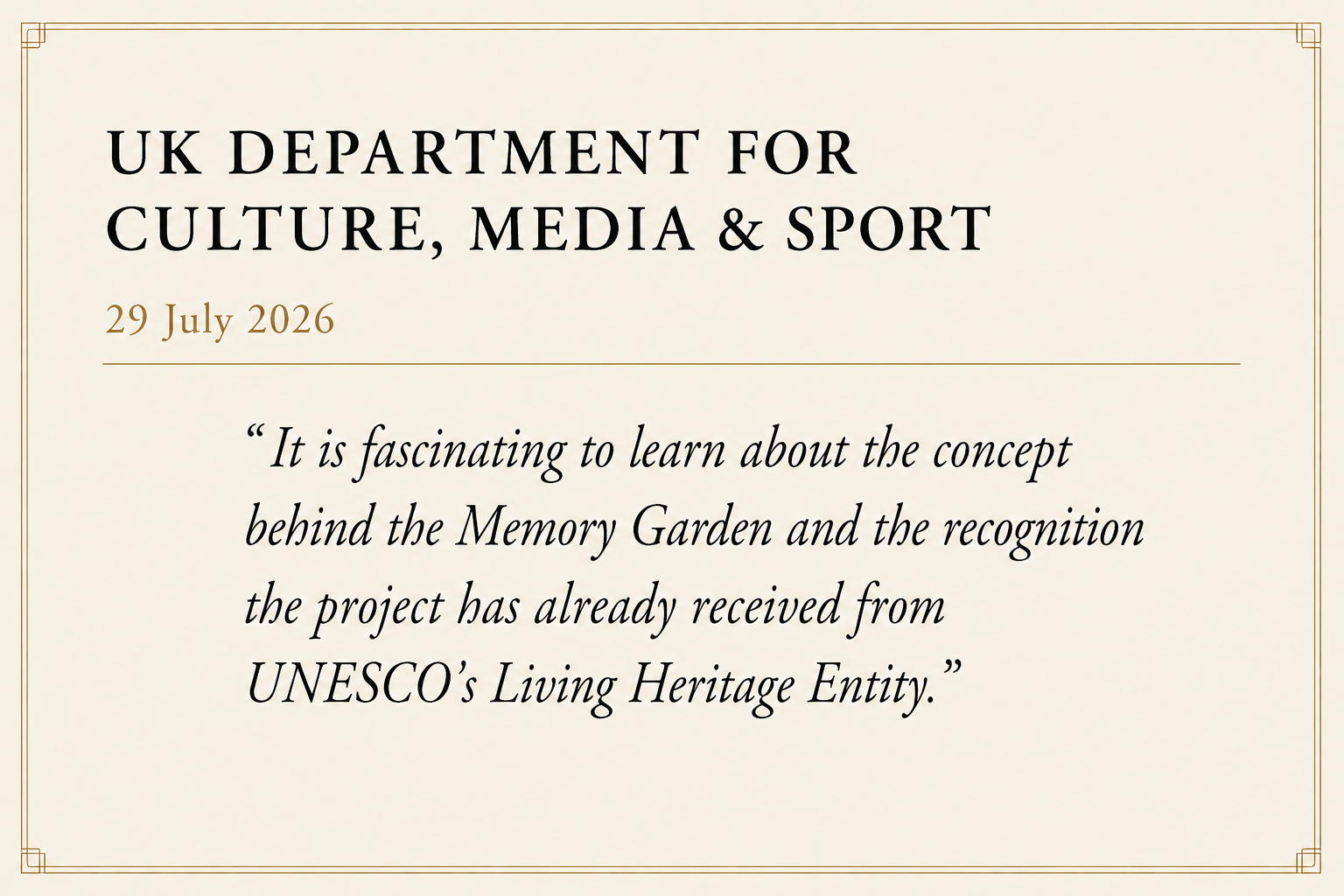
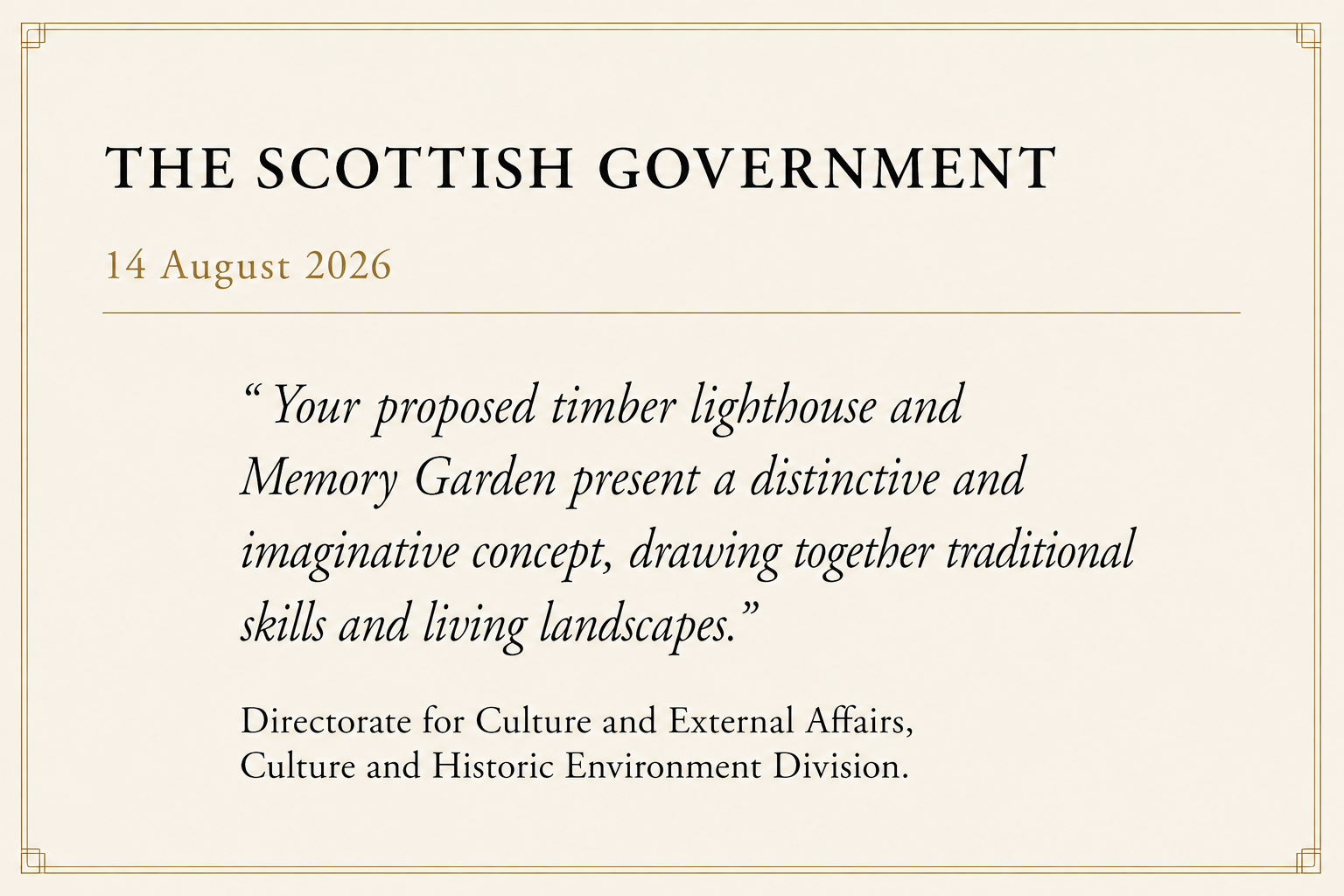
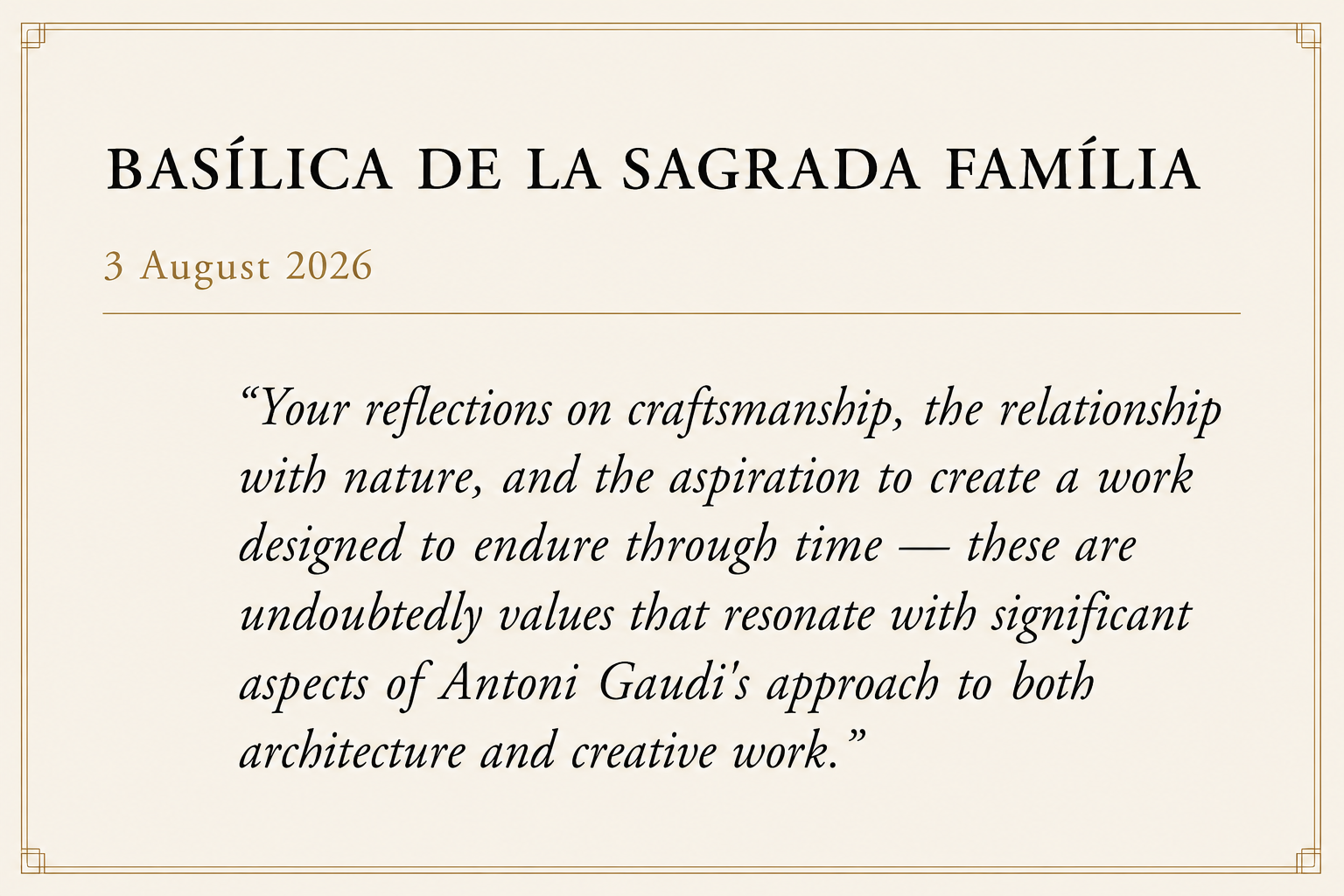


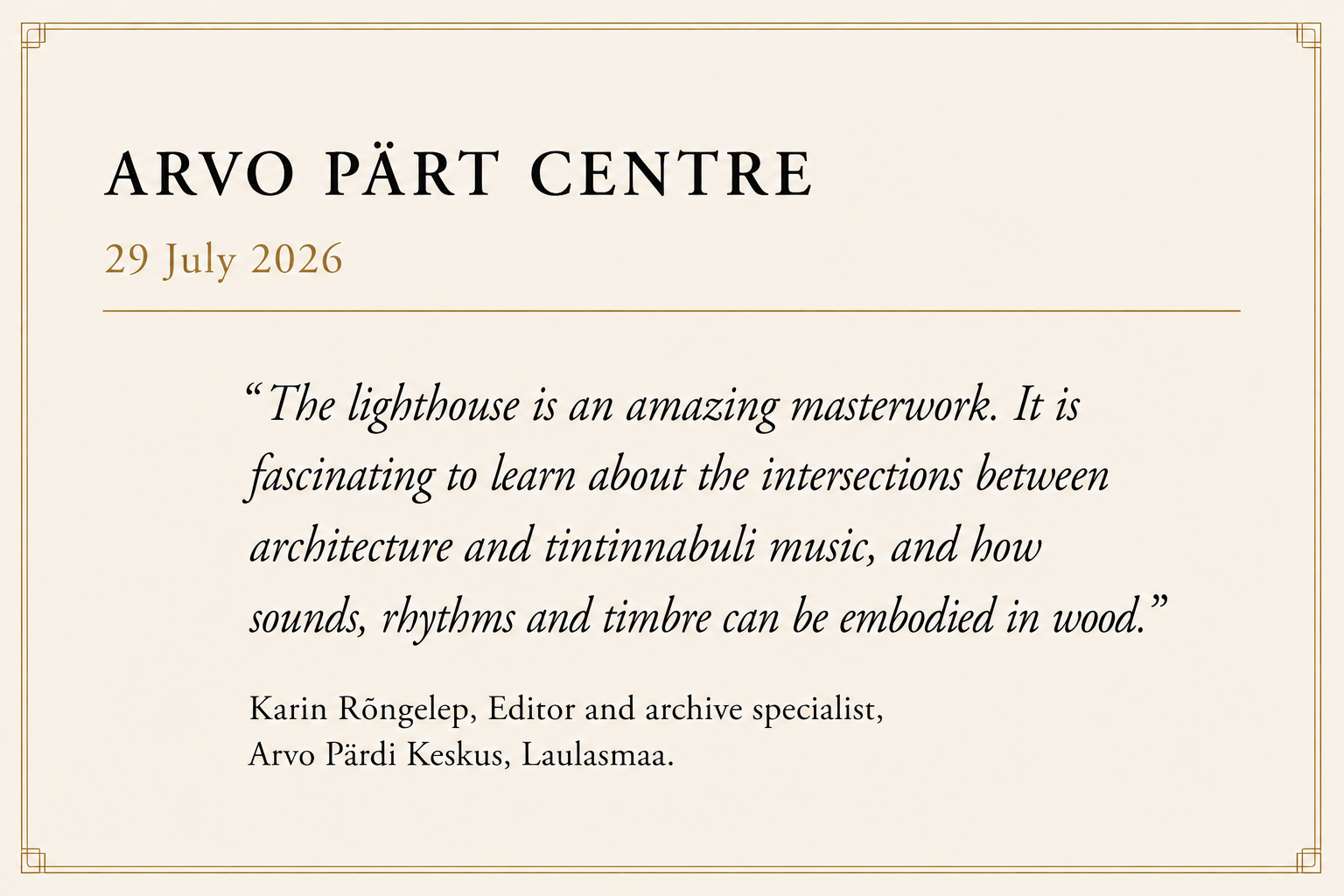


THE SAPIENS GARDEN is currently in the pre-development phase. Its conceptual framework has been defined and documented and is now being translated into design work.
In December 2025, THE SAPIENS GARDEN was formally presented to a number of leading cultural and institutional recipients in the UK and Europe:
In December 2025, THE SAPIENS GARDEN was formally presented to a number of leading cultural and institutional recipients in the UK and Europe:
- Private Secretary to His Majesty The King, Clarence House, London
- The King's Foundation, Cumnoc
- Apostolic Nunciature of the Holy See, London
- UNESCO Headquarters, Paris
- LUMA Foundation, Arles
Rather than separating disciplines, the practice moves between them: a building may emerge from the same thinking as a manuscript, an artefact, or a musical composition. Each project becomes another expression of a shared question — how spaces, objects, and gestures can carry meaning across generations.
This line of inquiry gradually led to the conception of THE SAPIENS GARDEN: a long-horizon cultural landmark where architecture, landscape, and intellectual heritage converge. The project reflects a belief that places of memory are shaped through design, craft, patience, and cultural dialogue.
I am an Independent Timber Architecture Practitioner, master craftsman, and author whose work explores how built space, landscape, and material culture can become places of memory and reflection. My practice brings together timber construction, architecture, literature, music, and handcrafted artefacts through craft traditions, cultural dialogue, and institutional collaboration.
My work begins with craft. I approach architecture as a form of making in which thought, material, and time converge.
I explore how cultural memory can take physical form.
My work begins with craft. I approach architecture as a form of making in which thought, material, and time converge.
I explore how cultural memory can take physical form.

ABOUT THE AUTHOR
1. Material Thinking
Ideas emerge through direct engagement with materials such as timber, tools, sound, and handcrafted objects. Construction and making are treated as intellectual processes.
2. Artefact as Communication
Physical objects function as carriers of cultural dialogue. Handcrafted artefacts, manuscripts, and constructed environments become ways of initiating conversation with audiences and institutions.
3. Long-Horizon Cultural Projects
Individual works are conceived as elements of a broader cultural ecosystem unfolding gradually over time. Within this framework, buildings, artefacts, texts, and performances operate as interconnected expressions of a single cultural practice.
AUTHOR METHOD
Across architecture, craft, artefacts, writing, and landscape, Alex Skarshelg’s work follows a consistent method rooted in hands-on making.
Projects develop through a single design-build-think process, in which ideas move between material construction, written language and crafted objects.
This method can be understood through three recurring practice pillars:


SELECTED TIMBER WORKS
CORE AREAS OF PRACTICE
Timber Architecture & Craft
Norwegian timber-building methods, handcrafted wooden houses, structural joinery, and full-cycle project delivery.
Cultural Landmarks & Long-Horizon Projects
Architectural and landscape projects developed around memory, public culture, education, and long-term stewardship.
Artefacts & Institutional Dialogue
Handcrafted objects, manuscripts, documents, and material gestures used as forms of cultural communication with audiences, institutions, and partners.
Education & Public Laboratory
Small-group timber craft education, public workshops, and the development of craft-based cultural environments.
Landscape & Living Heritage
Reforestation, ecological continuity, and the relationship between built heritage, living heritage, and the surrounding environment.
A blazing summer dusk or a drizzling October fog becomes something a passer-by can hear, read and see, each in their own way. Hand-hewn oak without, living systems within: the sky, the hour and the season, given a voice.
GREENWICH WEATHER BEACON
The project follows a logical and professionally structured path: first, THE SAPIENS LAB is developed as a planned urban cultural and craft platform in London. Then, through this environment, the architectural language, structural logic, materials, assembly process, public interest, and forms of community participation can be tested.
The prototype becomes the first material step of the larger cultural vision, the point at which THE SAPIENS GARDEN begins to take form in reality through craft, architecture, weather translated into art, documentation, community participation, and professional dialogue.
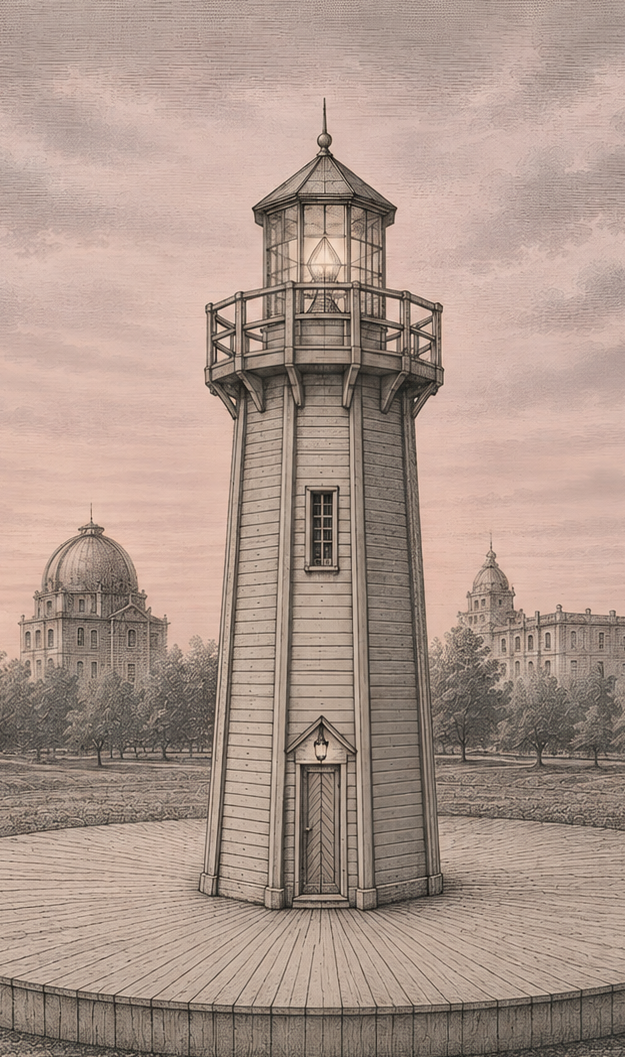
THE SAPIENS GARDEN takes its first physical form through a 14-metre handmade timber lighthouse, a working prototype conceived for Greenwich Park, beside the Prime Meridian, where the world learned to keep its time.
The Greenwich Weather Beacon is a weather instrument the size of a building. It reads the city's live weather in real time: light and cloud, wind and rain, the turning of the seasons. It answers by changing the colour of its own light, and with music, poetry and the written word, image and painting.
Timber Architecture & Craft
Norwegian timber-building methods, handcrafted wooden houses, structural joinery, and full-cycle project delivery.
Cultural Landmarks & Long-Horizon Projects
Architectural and landscape projects developed around memory, public culture, education, and long-term stewardship.
Artefacts & Institutional Dialogue
Handcrafted objects, manuscripts, documents, and material gestures used as forms of cultural communication with audiences, institutions, and partners.
Education & Public Craft
Small-group timber craft education, public workshops, and the development of craft-based cultural environments.
Landscape & Living Heritage
Reforestation, ecological continuity, and the relationship between built heritage, living heritage, and the surrounding environment.
PRACTICE PILLARS
I am an Independent Timber Architecture Practitioner, master craftsman, and author whose work explores how built space, landscape, and material culture can become places of memory and reflection. My practice brings together timber construction, architecture, literature, music, and handcrafted artefacts through craft traditions, cultural dialogue, and institutional collaboration.
My work begins with craft. I approach architecture as a form of making in which thought, material, and time converge.
I explore how cultural memory can take physical form.
The practice moves freely between disciplines: a building may emerge from the same thinking as a manuscript, an artefact, or a musical composition. Each project becomes another expression of a shared question: how spaces, objects, and gestures can carry meaning across generations.
This line of inquiry gradually led to the conception of THE SAPIENS GARDEN: a long-horizon cultural landmark where architecture, landscape, and intellectual heritage converge. The project reflects a belief that places of memory are shaped through design, craft, patience, and cultural dialogue.
ABOUT THE AUTHOR

SELECTED TIMBER WORKS
1. Material Thinking
Ideas emerge through direct engagement with materials such as timber, tools, sound, and handcrafted objects. Construction and making are treated as intellectual processes.
2. Artefact as Communication
Physical objects function as carriers of cultural dialogue. Handcrafted artefacts, manuscripts, and constructed environments become ways of initiating conversation with audiences and institutions.
3. Long-Horizon Cultural Projects
Individual works are conceived as elements of a broader cultural ecosystem unfolding gradually over time. Within this framework, buildings, artefacts, texts, and performances operate as interconnected expressions of a single cultural practice.
Ideas emerge through direct engagement with materials such as timber, tools, sound, and handcrafted objects. Construction and making are treated as intellectual processes.
2. Artefact as Communication
Physical objects function as carriers of cultural dialogue. Handcrafted artefacts, manuscripts, and constructed environments become ways of initiating conversation with audiences and institutions.
3. Long-Horizon Cultural Projects
Individual works are conceived as elements of a broader cultural ecosystem unfolding gradually over time. Within this framework, buildings, artefacts, texts, and performances operate as interconnected expressions of a single cultural practice.
AUTHOR METHOD
Across architecture, craft, artefacts, writing, and landscape, my work follows a consistent method rooted in hands-on making.
Projects develop through a single design-build-think process, in which ideas move between material construction, written language, crafted objects, and cultural dialogue.
This method can be understood through three recurring practice pillars:
GREENWICH
WEATHER BEACON
The project follows a logical and professionally structured path: first, THE SAPIENS LAB is developed as a planned urban cultural and craft platform in London. Then, through this environment, the architectural language, structural logic, materials, assembly process, public interest, and forms of community participation can be tested.
The prototype becomes the first material step of the larger cultural vision, the point at which THE SAPIENS GARDEN begins to take form in reality through craft, architecture, weather translated into art, documentation, community participation, and professional dialogue.
THE SAPIENS GARDEN takes its first physical form through a 14-metre handmade timber lighthouse, a working prototype conceived for Greenwich Park, beside the Prime Meridian, where the world learned to keep its time.
The Greenwich Weather Beacon is a weather instrument the size of a building. It reads the city's live weather in real time: light and cloud, wind and rain, the turning of the seasons. It answers by changing the colour of its own light, and with music, poetry and the written word, image and painting.
A blazing summer dusk or a drizzling October fog becomes something a passer-by can hear, read and see, each in their own way. Hand-hewn oak without, living systems within: the sky, the hour and the season, given a voice.
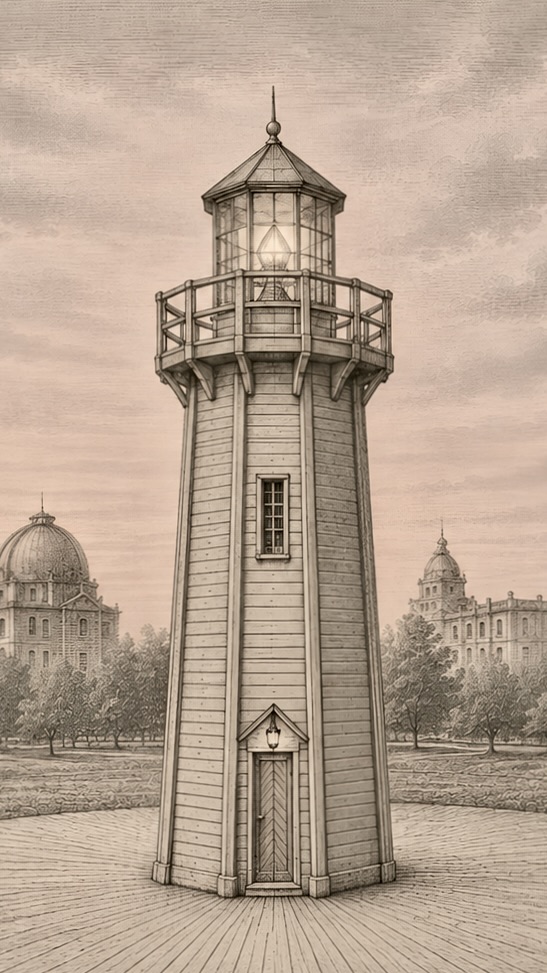
The Sapiens Garden has attracted the attention of the British press, with coverage exploring its vision, traditional timber craftsmanship, and the proposed wooden lighthouse on the North Norfolk coast.
1. GEOGRAPHICAL
Norfolk’s highest point could become home to a timber lighthouse. Read the article ↗
2. NORTH NORFOLK NEWS
Bold plans for wooden lighthouse at East Runton revealed. Read the article ↗
1. GEOGRAPHICAL
Norfolk’s highest point could become home to a timber lighthouse. Read the article ↗
2. NORTH NORFOLK NEWS
Bold plans for wooden lighthouse at East Runton revealed. Read the article ↗
PRESS

Alex Skarshelg
Independent Timber Architecture Practitioner
Founder and Project Lead, THE SAPIENS GARDEN
Email: alexskarshelg@gmail.com
Independent Timber Architecture Practitioner
Founder and Project Lead, THE SAPIENS GARDEN
Email: alexskarshelg@gmail.com
CONTACT
Alex Skarshelg
Independent Timber Architecture Practitioner
Founder THE SAPIENS GARDEN
Email: alexskarshelg@gmail.com
Independent Timber Architecture Practitioner
Founder THE SAPIENS GARDEN
Email: alexskarshelg@gmail.com
CONTACT
© Alex Skarshelg 2026.
All rights reserved. All conceptual, narrative, architectural, and cultural materials presented on this website are the intellectual property
of Alex Skarshelg, unless otherwise stated. These materials are formally documented and protected under UK and international copyright laws.
References to institutions and recipients on this website indicate correspondence, delivery of materials, or early-stage dialogue only.
They do not imply endorsement, partnership, funding, formal support, or institutional affiliation unless explicitly stated.
UK Copyright Service Registration Number: 68e8cc85-DMCW-17c-8569e5-0003
© Alex Skarshelg 2026.
All rights reserved. All conceptual, narrative, architectural, and cultural materials presented on this website
are the intellectual property of Alex Skarshelg, unless otherwise stated. These materials are formally documented and protected under UK and international copyright laws.
References to institutions and recipients on this website indicate correspondence, delivery of materials, or early-stage dialogue only. They do not imply endorsement, partnership, funding, formal support, or institutional affiliation unless
explicitly stated.
UK Copyright Service Registration Number:
68e8cc85-DMCW-17c-8569e5-0003